Cancer immunotherapy has transformed the landscape of oncology, offering powerful tools that train the body’s own immune system to fight cancer. RNA-Seq plays a pivotal role in precision oncology and aids in developing personalized cancer therapies. In our recent article How RNA Sequencing is Revolutionizing Cancer Research: Bringing Precision Medicine to Cancer Patients, we explored immune checkpoint inhibitors in cancer therapy and how RNA-Seq can be used to identify patients susceptible to immune checkpoint inhibitor monotherapy.
Harnessing the immune system - the promise of precision cancer vaccines
In contrast to endogenous cells, cancer cells are prone to accumulating somatic mutations and genomic instability due to their increased proliferation rates and lack of cell cycle control. These mutations can manifest “neoantigens” – cancer-specific aberrant proteins and peptides that the immune system recognizes as “non-self”. Neoantigens are thus a prime target for cancer immunotherapy.
Cancer vaccines are emerging as a promising approach with the potential to prevent, treat, and even cure certain types of cancer by targeting neoantigens in a personalized approach. Unlike tumor-associated antigenes (TAAs), which are commonly overexpressed in cancer but are also present in healthy tissue, targeting neoantigens reduces negative side effects and has the potential to counteract chemoresistance. Neoantigen vaccines represent a cutting-edge advance as they are highly immunogenic, use tumor-specific targets derived from diverse sources, and can generate long-term immune memory against cancer (Zhao et al., 2021).
In recent years, significant progress has been made in neoantigen identification, prediction, screening, and even therapeutic application, and delivery. Notably, neoantigen vaccines utilize various forms of delivery platforms, including DNA, mRNA or peptide moieties, and are applicable for next-generation precision cancer immunotherapy for a variety of cancer types such as glioblastoma, melanoma, colorectal, and lung cancer. However, several challenges remain before a unique treatment can be crafted for every cancer and every patient.
Advantages and challenges for personalized cancer immunotherapy
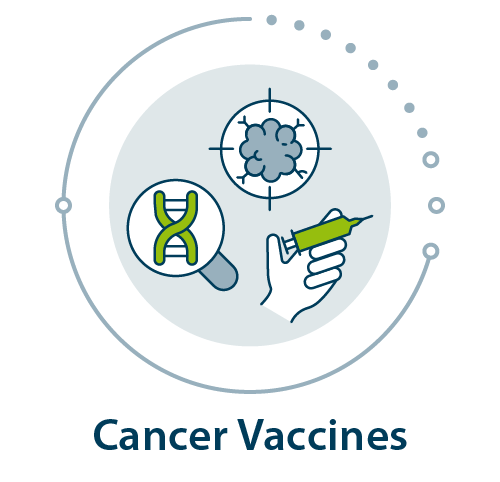
Targeting neoantigens for personalized cancer therapies offers significant benefits as they are absent from healthy cells and generate a potent, precise anti-tumor immune response with minimal off-target toxicity.
However, several challenges remain, such as identifying the most immunogenic neoantigens from a vast pool of mutations, tumor heterogeneity and variable neoantigen expression, or navigating manufacturing and complex approval and regulatory processes.
Cancer vaccines are not yet a universally applicable and accessible cure for all cancer patients, but they represent a major step forward in personalized, precision immunotherapy. With ongoing research and clinical trials, the potential of cancer vaccines becomes more and more apparent and they may become a cornerstone in the fight against cancer by harnessing the patients immune system.
Advantages and challenges for precision cancer vaccines
Advantages:
- Personalized cancer vaccines can trigger a targeted immune response with minimal damage to healthy cells.
- Targeting neoantigens has the potential for long-lasting protection via immune memory.
- Cancer vaccines show synergy with other immunotherapies and can be combined with e.g., checkpoint inhibitors for increased efficacy.
Challenges:
- Identification of the right antigens for effective targeting based on the mutational burden in the tumor remains a challenge and requires robust algorithms and multi-omics integrations.
- Tumor heterogeneity and immune evasionmechanisms may require adaptation of the vaccine during the course of treatment.
- Manufacturing is especially complex for personalized vaccines. Speed is of the essence to start the treatment as early as possible.
- Approval and regulatory processes are complex and require rigorous traceability, validation, reproducibility, and ultimately safety of the personalized vaccine.
The role of RNA sequencing in precision oncology and cancer immunotherapy
RNA-Seq has much wider applications in cancer research and immunotherapy, e.g., it enables detailed insights into gene function, biomarker discovery, and tumor heterogeneity. Differential gene expression analysis reveals how gene activity shifts across cancer stages, treatment responses, and tumor subtypes, ultimately aiding to uncover the molecular mechanisms and pathways that drive cancer progression. RNA-Seq can also be employed to identify a broad range of biomarkers, including those linked to tumor progression, treatment response, and recurrence. Biomarkers can either be coding mRNAs or non-coding transcripts such as miRNAs, lncRNAs, and circRNAs. In addition, RNA-Seq is a fundamental tool in discovering and mapping tumor heterogeneity and microenvironments that directly affect a patients response to treatments. For example, our recent webinar Bringing Precision Medicine to Cancer Immunotherapy with a Robust RNA Diagnostic Platform explores the role of RNA-Seq in stratifying patients for precision cancer therapy targeting immune checkpoint inhibitors.
In another study, RNA-Seq with QuantSeq revealed cancer-specific tissue markers associated with resistance to immunotherapy for colorectal cancer (Esposito et al., 2024). Expression analyses between responder and non-responder patient-derived organoid models identified various differentially expressed genes between the two cohorts. In addition, the authors found that expression of REG4 (Regenerating gene family member 4) was linked to an immunosuppressive microenvironment. REG4 has been recognized as an important biomarker for cancer prognosis and is associated with increased tumor progression, metastasis, and resistance to chemotherapy. The study connected upregulation of REG 4 with reduced cytotoxic T-cell infiltration and impaired anti-tumor immune activity emphasizing the importance for RNA-Seq as a means to elucidate mechanisms-of-action governing immunotherapy resistance, enabling the identification of genes contributing to immune evasion.
Abstract
Colorectal cancer (CRC) is a devastating disease, ranking as the second leading cause of cancer-related deaths worldwide. Immune checkpoint inhibitors (ICIs) have emerged as promising treatments; however, their efficacy is largely restricted to a subgroup of microsatellite instable (MSI) CRCs. In contrast, microsatellite stable (MSS) CRCs, which account for the majority of cases, exhibit variable and generally weaker response to ICIs, with only a subset demonstrating exceptional responsiveness. Identifying novel cancer-specific tissue (CST) markers predictive of immunotherapy response is crucial for refining patient selection and overcoming treatment resistance. In this study, we developed clinically relevant CRC organoids and autologous immune system interaction platforms to model ICI response. We conducted a comprehensive molecular characterization of both responder and non-responder models, identifying CST markers that predict ICI response. Validation of these findings was performed using an independent cohort of patient specimens through multiplex immunofluorescence. Furthermore, we demonstrated that knocking out a key gene from the identified predictive signature in resistant organoids restored immune sensitivity and induced T-cell-mediated apoptosis. Overall, our results provide novel insights into the mechanisms underlying immunotherapy resistance and suggest new markers for enhancing patient selection. These findings may pave the way for new therapeutic options in MSS patients, potentially broadening the cohort of individuals eligible for immunotherapy.
Similarly, RNA-Seq plays a vital role in neoantigen prediction. In addition to mutations, RNA-Seq also detects alternative splicing, gene fusions, and RNA editing events, broadening the range of potential neoantigens and adding significantly to the success of personalized treatments.
Improving neoantigen prediction by integrating DNA and RNA sequencing
RNA‑Seq has become indispensable in modern neoantigen discovery pipelines. It adds another layer to the genomic insights gained from whole genome or whole exome sequencing (WES) by confirming which mutations out of the plethora of accumulated changes in the tumor genomes are transcriptionally active. RNA-Seq extends the repertoire of neoantigens to novel classes of tumor‑specific variants (e.g., splice-derived neoantigens), and provides expression data which is critical for ranking of the most potent targets. The integration of DNA- and RNA sequencing allows the selection of candidates with higher immunogenic potential and biological relevance ultimately improving the design of personalized cancer vaccines.
While DNA sequencing detects numerous mutations and variants in tumor genomes, only a fraction of these generate neoantigens which elicit potent T-cell responses. RNA-Seq on the other hand facilitates the identification of neoantigens that are actively expressed and thus more likely presented on the surface of tumor cells. A study by Nguyen et al., 2023 found that 77.6% of variants were either unique to DNA-Seq or RNA-Seq, and RNA-Seq identified variants which are often associated with heightened immunogenic potential. The integration of RNA-Seq therefore facilitates a more comprehensive identification of clinically relevant neoantigens, significantly benefiting the development of personalized cancer immunotherapies. Table 1 summarizes the contributions of genome and transcriptome sequencing to neoantigen discovery.
Table 1 | Contribution of genome and transcriptome sequencing to neoantigen discovery.
| Neoantigen Discovery | Contribution of DNA-Seq | Contribution of RNA-Seq |
| Mutation discovery | Identification of somatic variants | Confirmation of the transcription of these variants |
| Expression validation | N/A | Filters non-expressed mutations (not detected in RNA-Seq data sets) |
| Fusion/splice detection | Limited to DNA fusions and structural changes | Detection of novel isoforms, expressed fusion transcripts |
| Neoantigen prioritization | Mutation type-based predictions | Expression level & splicing information broadens the repertoire for neoantigens |
| HLA (Human Leukocyte Antigen) binding prediction | Sequence-based predictions | Expression information increases prediction reliability |
| Specificity | Limited, wide array of mutations is identified | Narrows targets based on expression data and increased likelihood of immunogenicity |
The following studies add a few examples for the benefits to integrate expression analysis and genome sequencing to increase the efficacy and precision of cancer treatments.
The combination of DNA and RNA-Seq enhances cancer treatment strategies - a few examples
A 2020 study by Taber et al. explored the role of RNA-Seq in improving the prediction of neoantigens in chemotherapy-treated patients with muscle-invasive bladder cancer. The authors combined whole exome sequencing and 3′ mRNA-Seq with QuantSeq to assessed gene expression patterns, mutational landscapes, and immune responses during chemotherapy response. Here, RNA-Seq enriched the predictive accuracy of neoantigens by providing a comprehensive view of tumor-specific transcripts.
Abstract
Overtreatment with cisplatin-based chemotherapy is a major issue in the management of muscle-invasive bladder cancer (MIBC), and currently none of the reported biomarkers for predicting response have been implemented in the clinic. Here we perform a comprehensive multi-omics analysis (genomics, transcriptomics, epigenomics and proteomics) of 300 MIBC patients treated with chemotherapy (neoadjuvant or first-line) to identify molecular changes associated with treatment response. DNA-based associations with response converge on genomic instability driven by a high number of chromosomal alterations, indels, signature 5 mutations and/or BRCA2 mutations. Expression data identifies the basal/squamous gene expression subtype to be associated with poor response. Immune cell infiltration and high PD-1 protein expression are associated with treatment response. Through integration of genomic and transcriptomic data, we demonstrate patient stratification to groups of low and high likelihood of cisplatin-based response. This could pave the way for future patient selection following validation in prospective clinical trials.
The following study by Barroux et al., 2025 utilized RNA-Seq with QuantSeq in a multi-omics framework to elucidate transcriptional changes alongside genetic alterations in esophageal adenocarcinoma patients. Locally advanced esophageal adenocarcinoma presents significant challenges for treatment, with a high incidence of resistance to neoadjuvant therapies. RNA-Seq provided a comprehensive view of gene expression alterations across multiple time points during treatment capturing the highly dynamic adaptive response of the tumor while clonal expansion was limited. The authors identify profound transcriptomic and immune landscape changes with the potential for further exploration into combination immunotherapy.
Abstract
Locally advanced esophageal adenocarcinoma remains difficult to treat and the ecological and evolutionary dynamics responsible for resistance and recurrence are incompletely understood. Here, we performed longitudinal multiomic analysis of patients with esophageal adenocarcinoma in the MEMORI trial. Multi-region multi-timepoint whole-exome and paired transcriptome sequencing was performed on 27 patients before, during and after neoadjuvant treatment. We found major transcriptomic changes during treatment with upregulation of immune, stromal and oncogenic pathways. Genetic data revealed that clonal sweeps through treatment were rare. Imaging mass cytometry and T cell receptor sequencing revealed remodeling of the tumor microenvironment during treatment. The presence of genetic immune escape, a less-cytotoxic T cell phenotype and a lack of clonal T cell expansions were linked to poor treatment response. In summary, there were widespread transcriptional and environmental changes through treatment, with limited clonal replacement, suggestive of phenotypic plasticity.
Commonly used sample types for neoantigen prediction and precision medicine present additional challenges to researchers
The tumor samples in these studies were analyzed after conservation as FFPE (formalin-fixed paraffin-embedded) blocks, a commonly used preservation technique that imposes additional challenges for NGS analysis, as exemplified in our article summarizing Applications of FFPE samples in modern research. Tissue fixation in formalin stops cellular processes and preserves nucleic acids – DNA and RNA can both be extracted from FFPE tissues. However, due to cross-linking between nucleic acids and proteins during the fixation process, damage often occurs leading to fragmentation and accumulation of nucleotide exchanges caused by the procedure itself. In addition, errors may occur during cDNA synthesis and amplification for downstream assays as enzymes need to read over chemically altered bases or amino acids still cross-linked to the nucleic acid templates. While FFPE material has immense advantages during clinical practice and storage, the analysis of these samples requires robust protocols and meticulous methods to generate the best data quality possible. An additional benefit of combining DNA- and RNA-Seq on FFPE samples therefore lies in the higher accuracy to identify tumor-specific mutations and control for preservation artifacts – especially in clinical patient samples which are very limited in material and often cannot afford replicate analyses.
Other commonly used sample types in cancer immunology include whole blood, PBMCs, serum, and plasma which are minimally invasive, can be collected easily from a large group of patients and are often used as prime sample source for treatment-response studies following larger patient cohorts over time. Similar to FFPE, blood samples bring a range of challenges connected to storage, logistics, and preservation. To prevent blood from coagulation and preserve nucleic acids for further analysis, blood is stored in special collection tubes, such as PAXgene or EDTA tubes, and requires extraction methods specific for liquid biopsy samples. Further RNA analysis is challenging as samples often show a high degree of degradation due to freeze/thaw, contain vast amounts of genomic DNA, and in case of whole blood, globin mRNA masking expression changes of interest. Our blog on Whole Blood RNA-Seq: Best Practice collects a few tips and tricks for successful processing of whole blood for RNA sequencing.
Expert NGS sequencing service providers can significantly accelerate neoantigen identification
Partnering with experienced sequencing service providers and CROs can significantly increase assay speed and accelerate neoantigen discovery. A fast discovery is crucial to ensure patients can be treated in a timely manner, to increase treatment success, and ensure the highest possible quality of life during cancer care.
At Lexogen NGS Services, several projects have been successfully realized to advance precision medicine and aid in the development numerous promising personalized therapies. Lexogen NGS Services has an outstanding track record for processing of challenging samples types for RNA-Seq, DNA-Seq, and single-cell analysis including:
- various cell lines and primary cells
- tissues
- FFPE samples
- whole blood samples
- serum, plasma and other biofluids
- PBMCs
- extracellular vesicles
- etc.
Lexogen provides customizable sequencing services and tailored bioinformatics solutions to pharmaceutical and biotech companies, academic institutions, and researchers worldwide. Our end-to-end services, paired with project planning and consultation, is fully flexible and also allows customers to start at any step. From extraction to data analysis and reporting – we adapt to fit your individual needs.

Explore our case studies to learn more about NGS sequencing service in drug discovery and precision medicine applications.
About Lexogen NGS Services
Lexogen – Driving RNA Research in Precision Medicine. We develop innovative solutions for RNA sequencing that empower scientists to gain deeper insights into gene regulation and advance research in areas such as cancer, immunology, and neuroscience. Lexogen is a leading provider of kits, reagents and NGS services. Our end-to-end solutions include whole transcriptome RNA-seq, (high-throughput) expression profiling, single-cell sequencing, as well as combined RNA- and DNA-Seq – from sample preparation to data analysis. Lexogen’s expertise in RNA biology and commitment to quality and efficiency ensure accurate and reliable results to successfully advance your research. Lexogen NGS Services has a proven track record in drug discovery and precision medicine, supporting projects across key stages including: target identification, pathway analysis, mode-of-action elucidation, biomarker discovery, immune profiling, neoantigen prediction, and drug repurposing. We leverage advanced technologies like SLAMseq and LUTHOR to provide our clients with comprehensive and insightful data. Consult with us to discuss your specific research needs and explore how our innovative solutions can advance your precision medicine projects.
References
Barroux, M., Househam, J., Lakatos, E. et al. Evolutionary and immune microenvironment dynamics during neoadjuvant treatment of esophageal adenocarcinoma. Nat Cancer 6, 820–837 (2025). DOI:10.1038/s43018-025-00955-w
Esposito, A., Agostini, A., Quero, G. et al. (2024) Colorectal cancer patients-derived immunity-organoid platform unveils cancer-specific tissue markers associated with immunotherapy resistance. Cell Death Dis 15, 878. DOI:10.1038/s41419-024-07266-5
Nguyen, B.Q.T., Tran, T.P.D., Nguyen, H.T., et al. (2023) Improvement in neoantigen prediction via integration of RNA sequencing data for variant calling. Front Immunol. 4;14:1251603. DOI:10.3389/fimmu.2023.1251603. PMID: 37731488; PMCID: PMC10507271.
Taber, A., Christensen, E., Lamy, P. et al. (2020) Molecular correlates of cisplatin-based chemotherapy response in muscle invasive bladder cancer by integrated multi-omics analysis. Nat Commun 11, 4858. DOI:10.1038/s41467-020-18640-0
Zhao, X., Pan, X., Wang, Y. et al. Targeting neoantigens for cancer immunotherapy. Biomark Res 9, 61 (2021). DOI:10.1186/s40364-021-00315-7
Written by Dr. Yvonne Göpel